

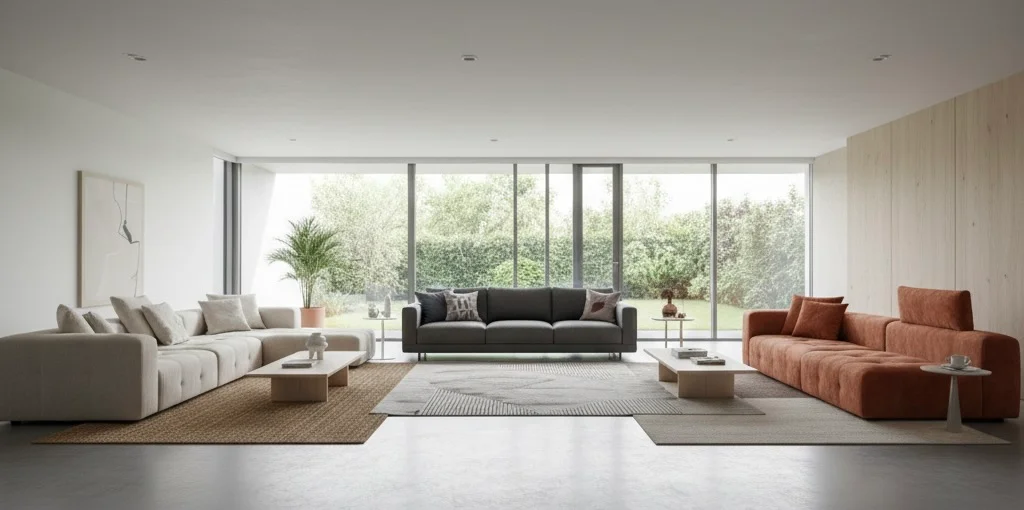
You choose the perfect sofa by balancing comfort, style, and space—selecting a size that fits your room, a design that matches your lifestyle, and materials that support everyday use. The best sofa doesn’t just look good; it feels right, fits naturally into your home, and continues to perform well years after purchase.
In simple terms, the perfect sofa is one that supports how you live, not just how your home looks.
Why Sofa Shopping Feels So Overwhelming (And Why It Doesn’t Have to Be)
Most people don’t buy sofas often. When they do, the choices feel endless—L-shaped or straight, firm or soft, fabric or leather, modern or classic. Many buyers share the same story: they fall in love with a sofa in the showroom, only to realize later that it overwhelms the living room, feels uncomfortable during long evenings, or doesn’t age well.
This guide exists to prevent that regret. Think of it as a calm conversation with a friend who has already made the mistakes—so you don’t have to.
Step 1: Start With Your Space, Not the Sofa
Before browsing designs, pause and look at your living room. The room itself tells you what kind of sofa it needs.
What to Measure First
-
Room width and depth
-
Distance between walls and walkways
-
Doorways, staircases, and elevators
-
Existing furniture placement
A common mistake is choosing a sofa that visually fits but physically blocks movement. Always leave 75–90 cm of walking space around seating areas to keep the room breathable.
Step 2: Choosing the Right Sofa Size and Layout
The sofa should feel like it belongs—not like it’s squeezing in or floating awkwardly.
Before diving into the table below, think about how many people sit on your sofa daily and how often you host guests.
| Sofa Type | Best For | Why It Works |
|---|---|---|
| 2-Seater | Small apartments | Compact and efficient |
| 3-Seater | Standard homes | Balanced size and comfort |
| L-Shaped | Families | Maximizes seating |
| Sectional | Large spaces | Flexible configuration |
| Modular | Growing households | Adaptable layout |
| Sofa Bed | Guest-ready homes | Dual-purpose |
Step 3: Match the Sofa to Your Lifestyle
A sofa should support your real life, not an idealized version of it.
A family with children needs durability. A couple who loves movie nights needs deep seating. Someone working from home may need better back support.
Lifestyle-Based Sofa Choices
-
Families: Stain-resistant fabric, removable covers
-
Pet owners: Scratch-resistant upholstery
-
Entertainers: Sectional or modular sofas
-
Minimalists: Clean lines and neutral tones
When a sofa aligns with daily habits, it quietly improves quality of life.
Step 4: The Frame—The Hidden Backbone of Your Sofa
The frame determines whether your sofa lasts three years or fifteen.
Best Frame Materials
-
Kiln-dried hardwood (most durable)
-
High-grade plywood (stable and cost-effective)
Materials to Avoid
-
Particleboard
-
Plastic frames
-
Untreated softwood
A strong frame prevents sagging, squeaking, and structural failure—issues that rarely show up in the showroom but appear quickly at home.
Step 5: Cushion Comfort—Where Preference Meets Support
Comfort is personal, but some cushion materials perform better long term.
Before the table below, ask yourself: do you prefer a sofa you sink into, or one that supports you upright?
| Cushion Type | Feel | Best For |
|---|---|---|
| High-density foam | Firm | Long-term support |
| Memory foam | Contoured | Lounging comfort |
| Down-filled | Soft | Cozy seating |
| Foam + fiber blend | Balanced | Everyday use |
A well-balanced cushion maintains its shape while remaining comfortable during long use.
Step 6: Upholstery—More Than Just a Color Choice
Fabric affects durability, maintenance, temperature, and even mood.
Before choosing, think about how often the sofa will be used and by whom.
| Upholstery Type | Best For | Key Advantage |
|---|---|---|
| Fabric | Everyday homes | Breathable and cozy |
| Performance fabric | Kids & pets | Stain resistance |
| Leather | Busy households | Easy to clean |
| Velvet | Statement interiors | Luxurious look |
Neutral upholstery offers flexibility, while textured fabrics add personality.
Step 7: Style That Complements Your Home
Your sofa should feel like it belongs in your space, not like it was dropped in from another home.
Style Matching Tips
-
Modern: Low-profile, sleek lines
-
Scandinavian: Light colors, wooden legs
-
Minimalist: Neutral tones, simple silhouettes
-
Classic: Tufted details, rolled arms
-
Japandi: Low seating, soft textures
When in doubt, timeless designs age better than trendy ones.
Step 8: Features That Add Real Value
Modern sofas often include extra features—but not all are necessary.
Useful Features to Consider
-
Modular sections
-
Storage compartments
-
Adjustable headrests
-
Removable covers
Choose features that genuinely improve daily comfort, not just showroom appeal.
Step 9: Budgeting for Long-Term Satisfaction
A sofa is an investment. Instead of focusing on price alone, consider cost-per-use.
A slightly higher upfront cost often means:
-
Better materials
-
Longer lifespan
-
Consistent comfort
Buying once—and buying well—saves money and stress.
Step 10: Always Test Before You Buy
If possible:
-
Sit for 5–10 minutes
-
Check back and lumbar support
-
Test seat depth and arm height
Comfort reveals itself through experience, not specifications.
Common Sofa Buying Mistakes to Avoid
-
Choosing style over comfort
-
Ignoring measurements
-
Buying oversized sofas
-
Overlooking fabric durability
-
Following trends blindly
Avoiding these mistakes makes the buying process calmer and more rewarding.
Frequently Asked Questions (FAQ)
What sofa is best for small spaces?
Compact, armless, or modular sofas work best.
How long should a quality sofa last?
Between 8–15 years with proper care.
Is firm or soft better?
Firm sofas last longer; soft sofas feel cozier.
Are modular sofas worth it?
Yes, especially for flexible or growing households.
A Sofa That Grows With You
Choosing the perfect sofa isn’t about chasing trends or picking the most expensive option—it’s about understanding how you live and what makes your home feel complete. When comfort, style, and space align, a sofa becomes more than furniture. It becomes the place where conversations happen, evenings unwind, and memories quietly form.
Take your time. Measure carefully. Sit, test, and imagine daily life. The right sofa won’t shout for attention—it will simply feel right, every single day.


