

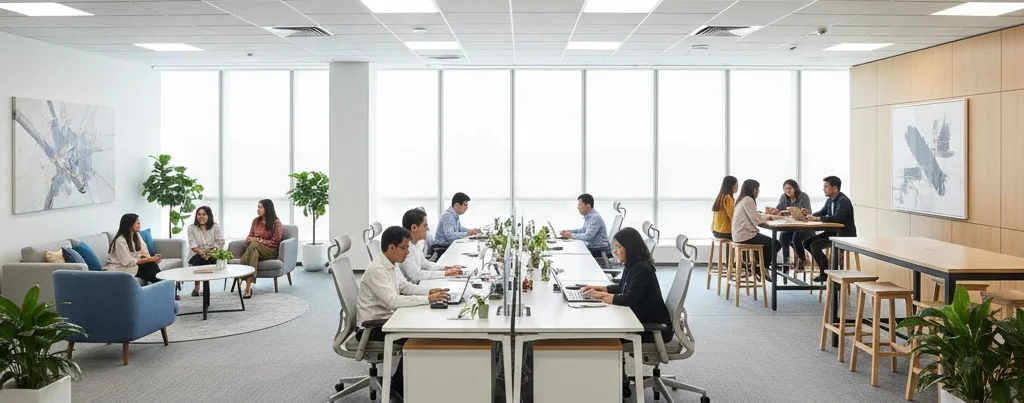
Modern office furniture trends for Malaysian SMEs focus on ergonomic workstations, space-efficient layouts, flexible designs, and employee wellbeing—balancing productivity, affordability, and modern aesthetics.
In short, today’s offices are no longer about filling space with desks; they’re about creating environments where people can work comfortably, collaborate easily, and adapt quickly to change.
Introduction: Why Office Furniture Matters More Than Ever
A few years ago, many Malaysian SMEs treated office furniture as an afterthought—buy desks, add chairs, and move on. But after hybrid work, rising rental costs, and a renewed focus on employee wellbeing, office furniture has quietly become a strategic business decision.
Picture this: a growing SME in Petaling Jaya upgrades from bulky cubicles to modular workstations. Within months, employees complain less about back pain, collaboration improves, and the office suddenly feels bigger—without changing addresses. That’s the power of thoughtful furniture design.
In this guide, we’ll walk through modern office furniture and workstation trends shaping Malaysian SMEs, why they matter, and how to choose solutions that support productivity without blowing your budget.
Why Office Furniture Trends Matter for Malaysian SMEs
Beyond Looks: Furniture as a Business Tool
For SMEs, every investment must justify itself. Office furniture now plays a role in:
-
Employee productivity and comfort
-
Talent attraction and retention
-
Space efficiency in high-rent areas like KL and Penang
-
Brand image when clients visit your office
A modern workstation sends a subtle message: this company values its people and thinks ahead.
Trend #1: Ergonomic Workstations Are No Longer Optional
The Rise of Ergonomic Awareness
Once upon a time, ergonomic chairs were seen as “luxury items.” Today, they’re a necessity—especially for teams spending 8–10 hours at their desks.
Popular ergonomic features include:
-
Adjustable lumbar support
-
Height-adjustable desks (sit-stand workstations)
-
Armrest and seat-depth customization
Why Malaysian SMEs Are Embracing Ergonomics
-
Reduced sick days and discomfort
-
Improved focus and productivity
-
Long-term cost savings on healthcare-related issues
SMEs are realizing that cheap furniture often costs more in the long run.
Trend #2: Modular Workstations for Flexible Growth
Furniture That Grows With Your Business
Many Malaysian SMEs expand unpredictably. Modular furniture allows offices to reconfigure layouts without replacing everything.
Key benefits:
-
Easy to rearrange teams
-
Scales with headcount
-
Supports hybrid and project-based work
Common Modular Elements
-
Bench-style desks
-
Movable partitions
-
Plug-and-play cable systems
Trend #3: Space-Saving Designs for Smaller Offices
Before diving into solutions, it helps to see how different furniture types impact space efficiency.
Space Efficiency Comparison Table
| Furniture Type | Space Usage | Best For | SME Benefit |
|---|---|---|---|
| Traditional cubicles | High | Large offices | Less flexible |
| Modular benches | Medium | SMEs | Space-efficient |
| Hot-desking stations | Low | Hybrid teams | Cost savings |
| Foldable furniture | Very low | Small offices | Maximum flexibility |
This table shows how modern designs help SMEs maximize limited office space without sacrificing comfort.
Trend #4: Hybrid Workstation Setups
Offices Are No Longer “Full-Time”
Many Malaysian SMEs now operate on hybrid schedules, which has reshaped furniture needs.
Hybrid-friendly furniture includes:
-
Hot-desking stations
-
Lockable mobile pedestals
-
Shared collaboration tables
Instead of assigning one desk per employee, SMEs optimize usage—saving space and costs.
Trend #5: Collaboration-Focused Office Layouts
From Silos to Shared Spaces
Modern offices encourage team interaction, not isolation.
Popular collaborative furniture includes:
-
Open meeting pods
-
Lounge seating with side tables
-
High tables for quick discussions
These setups reduce reliance on formal meeting rooms while encouraging spontaneous idea-sharing.
Trend #6: Minimalist & Clean Aesthetics
Why Minimalism Works for SMEs
Minimalist furniture isn’t just trendy—it’s practical.
Benefits:
-
Easier maintenance
-
Cleaner visual flow
-
Professional brand image
Neutral colors, slim profiles, and hidden storage dominate modern Malaysian office designs.
Trend #7: Sustainability & Eco-Friendly Furniture
Green Choices Are Gaining Ground
More SMEs are choosing:
-
FSC-certified wood
-
Low-VOC materials
-
Durable furniture with longer lifespans
Sustainable furniture supports ESG goals and appeals to environmentally conscious clients and employees.
Choosing the Right Workstation: A Practical Guide
Factors SMEs Should Consider
-
Team size and growth plans
-
Available floor space
-
Nature of work (focused vs collaborative)
-
Budget and long-term durability
Workstation Selection Comparison Table
| SME Need | Recommended Workstation | Why It Works |
|---|---|---|
| Small startup | Modular bench desks | Affordable & scalable |
| Hybrid team | Hot-desking setup | Space-efficient |
| Design agency | Collaborative pods | Encourages creativity |
| Corporate SME | Ergonomic cubicles | Focus & comfort |
This table helps decision-makers match workstation types with real business needs.
Budgeting Smart: Cost vs Value
Modern furniture doesn’t have to mean expensive.
Smart budgeting tips:
-
Invest more in chairs than desks
-
Choose modular systems over fixed units
-
Prioritize durability over aesthetics alone
Common Questions SMEs Ask (FAQ)
Is ergonomic furniture worth it for small teams?
Yes. Even a team of five benefits from reduced discomfort and better productivity.
How often should office furniture be replaced?
Quality furniture lasts 7–10 years if maintained properly.
Can modern furniture fit traditional offices?
Absolutely. Modern designs adapt easily to older layouts.
Mistakes Malaysian SMEs Should Avoid
-
Buying furniture without measuring space
-
Ignoring cable management
-
Choosing style over comfort
-
Overcrowding workstations
The Future of Office Furniture for SMEs
Looking ahead, expect:
-
More smart desks with charging ports
-
AI-driven space planning
-
Greater focus on mental wellbeing zones
Office Furniture as a Strategic Advantage for SMEs
Modern office furniture is no longer just about filling a room—it’s about shaping how people work, collaborate, and feel at work. For Malaysian SMEs, the right workstation choices create environments that support growth without unnecessary costs.
By embracing ergonomic designs, modular layouts, and flexible workstations, SMEs can future-proof their offices while sending a clear message: this is a workplace built for people, not just profits. Thoughtful furniture decisions today lay the foundation for healthier teams, better productivity, and sustainable business growth tomorrow.


